Category Archives: Process

Carbon Printing Workshops Summer 2014

It has been an enjoyable few months working with new carbon printers this summer. I have been teaching traditional dichromate sensitising. I have also been introducing a new faster workflow by using Diazidostilbene (DAS) sensitiser, which so far, as I can gather has no harmful side effects. It is also a more greener product to work with, than other chemicals I have used in the past.

Students have enjoyed experimenting with this new DAS . Good results are being gained with negatives that yield a density range of  1.80

Pyro stain negs also work very well with this sensitising technique.

We have been making a 0.50% DAS sensitiser that is mixed directly into liquid carbon pigment. The DAS carbon tissue has an excellent shelf life which is another advantage. I have used tissue that is six months old and results are amazingly constant.

I enjoy using both methods in my carbon printing and will continue to work with both sensitisers.


Sun, Sea, Salt & Silver

I am now preparing small salt prints for my next public show at Woodend as part of the North Yorkshire Open Studios 2014 Moors & Coast exhibition.

Continuing with my experimentation with salt printing  I have started working outside the darkroom and making solar exposures.Yet another step back in time to when the sun was used to make the very first photographic prints.
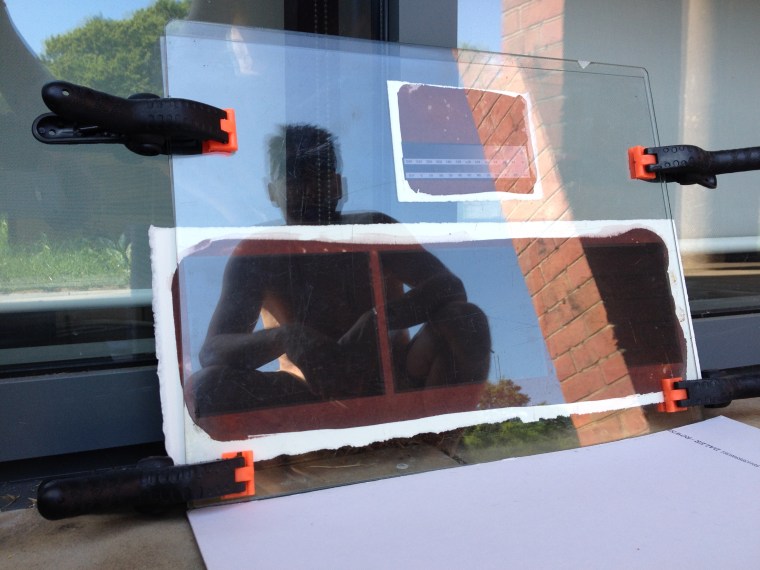
David Chalmers Salt printing

I made a few solar exposures about 25 years ago and had forgotten how refreshingly simple it was to make photographs using this technique. With any printing out process it is a real joy to see the image develop during the exposure, working outdoors with the sun enhances this experience .

Working in the summer months when the sun’s declination is high, direct exposure to the sun in blue sky (4 hours ether side of the sun’s transit) at latitude 54 degrees north gives me exposures that are 6 times faster than my mercury vapour lamp in the darkroom. In overcast cloudy conditions the exposures are about 2 times faster.

Using North Sea water (boiled and filtered) I prepared my salted paper with a 30 second salt bath. After letting it dry. The silver nitrate (10% concentration was brushed on with a 6% citric acid formula of 1:1 silver to citric.

I have not calculated the salt content of the North Sea water but it works well with my negatives so far. The first test prints have proved to be very promising and I will be making more seascape studies today.

This is one of my test prints, this is from a 8×10 HP5+ negative. Printed on Indian rag paper 640 gms.
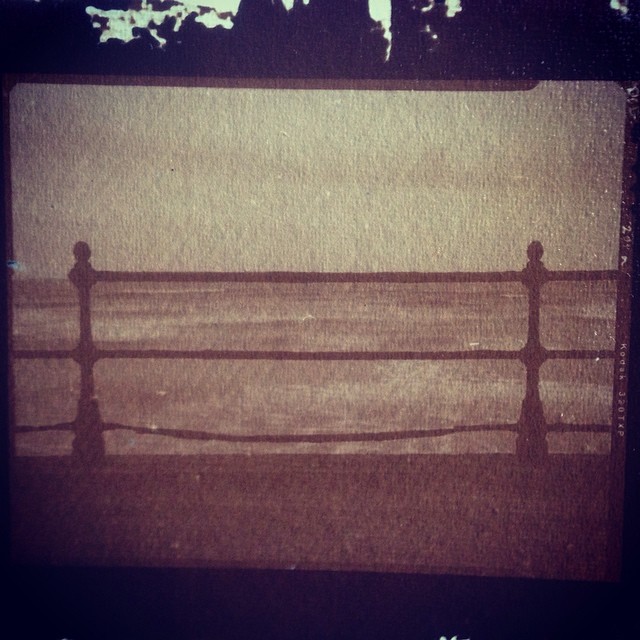
david chalmers salt printing

You can view my work during the North Yorkshire Open Studios event along with the Moors and Coast exhibition at the gallery at Woodend, The Crescent, Scarborough, North Yorkshire, YO11 2PW

Gallery opening times: Monday – Friday 9am – 5pm.

I will also be in attendance during the NYOS weekends of Saturday & Sunday 7 & 8 June and 14 & 15 June from 10.30 – 5.30pm. I will be available to chat about my techniques and processes.
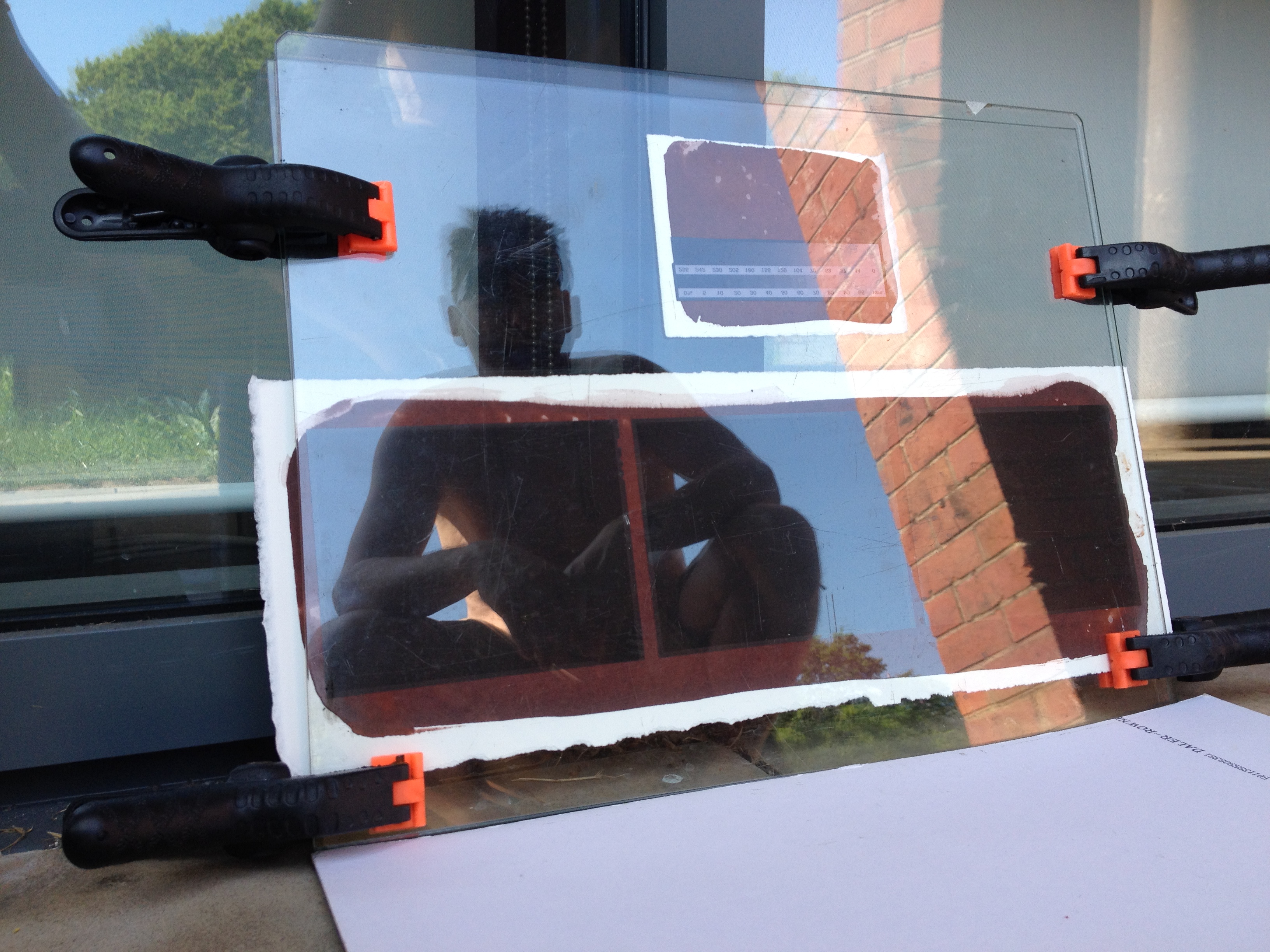


Yorkshire Coast salt prints

Continue reading


Diazidostilbene (DAS)

I have been steadily working through several experiments with this sensitiser. The key problem for me is that it yields  a much softer contrast than potassium dichromate so my negatives are difficult to print with DAS.

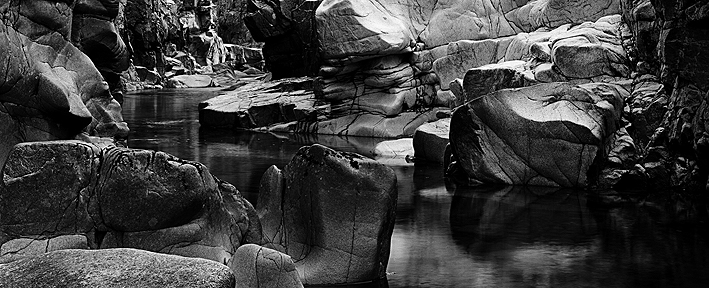
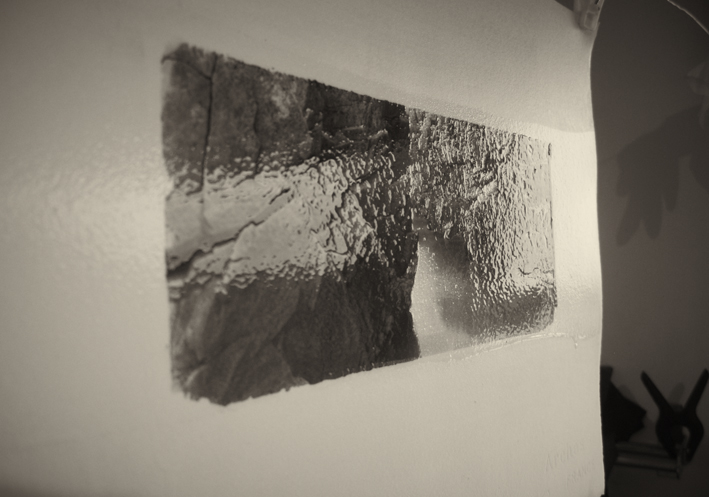
I have however had some success with a series of rock studies that I photographed on HP5 8×10 sheet film. This series of  abstract photographs will form my next carbon exhibition in summer 2014.

My work prints so far have been difficult to make in terms of contrast. I have refined my DAS formula. I am now using Kremer lamp black and oxide black pigments with the addition of glycerin and sugar plus wetting agent in my glop mixture. This has helped my highlight detail considerably and the Kremer pigment gives a neutral mezzotint free tone.

I am also printing on very old stock of fixed out oriental seagul bromide paper. This gives an unusual silvery relief to the prints. The DAS is also leaving a subtle pink stain which in this case lends itself beautifully to the print quality of the rocks as they are of wonderful soft pink granite rock formations. It is impossible to scan or copy the prints true tonal quality. Here is a silver gelatine print made some years ago of my new carbon subject. this is just a taster of more to come.

I will be printing over the festive season as the commercial studio is shut down for the holidays.

Seasons greetings and best wishes to all for 2014!!

Copyright ©David Chalmers


DAS Sensitiser

My initial tests with Diazidostilbene (DAS) sensitiser have been consistent. Working with the same negative given same exposure and processing technique my time trial of 7, 14 , 28 and finally 60 days gave exactly the same result in terms of exposure and contrast.

I have made several more batches experimenting with 0.3% to 0.7% concentrations and more recently explored new pigments including Sumi ink and iron oxide black. Again the DAS performs consistently well.

I store the paper an old bromide paper box inside black plastic bag and thats it. I have noticed with stronger concentrations of DAS sensitiser ie 0.5% and greater there is a yellow stain which is more apparent when using cotton rag papers. This can be cleared, but I am still waiting to test clearing formula using metabisulphate and potassium permanganate.

Cotton Wood


Adrenalin Rush

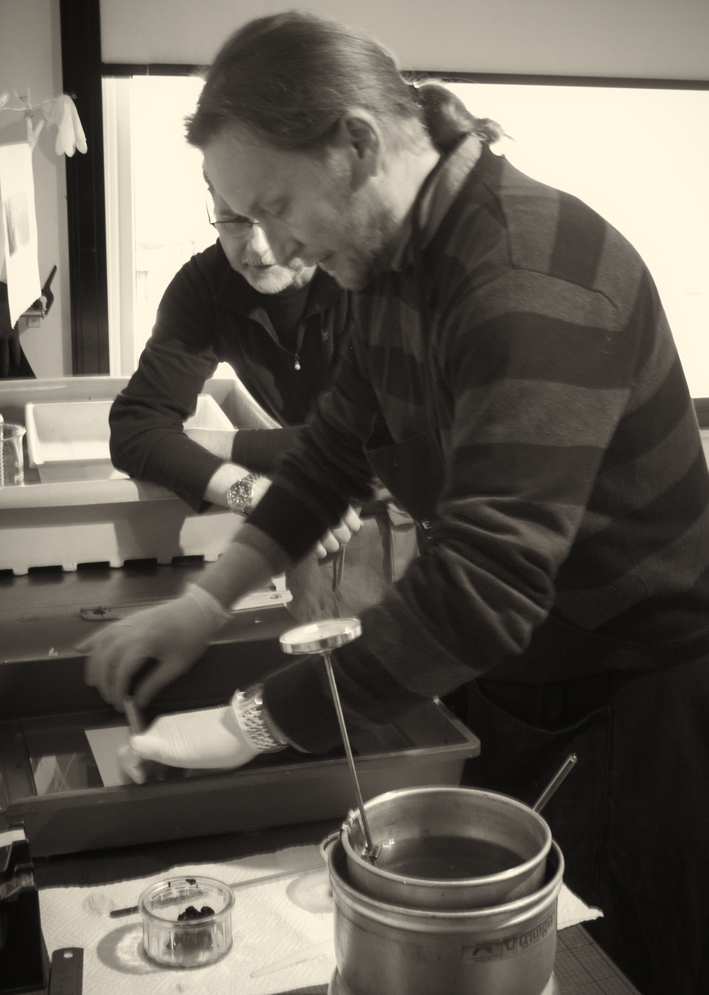
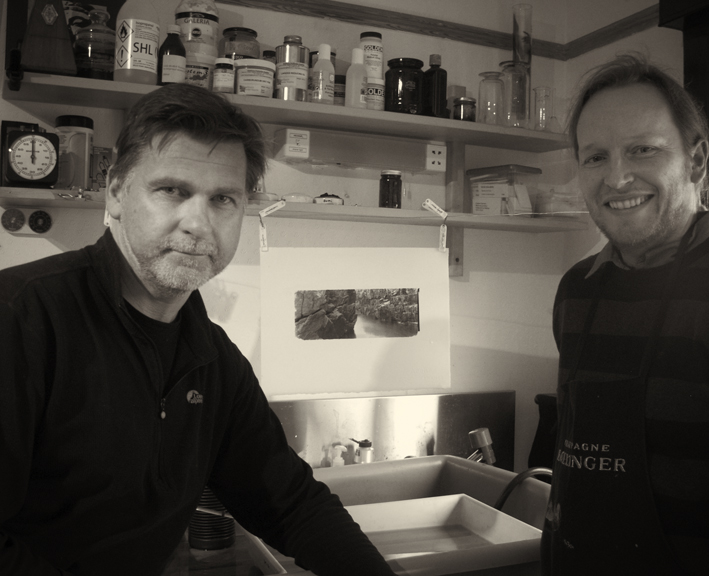
It’s always a pleasure to see a student enjoying the carbon printing process. This really is such a wonderfully simple process in principal, however as with most simple things in life,they are often the hardest to master.

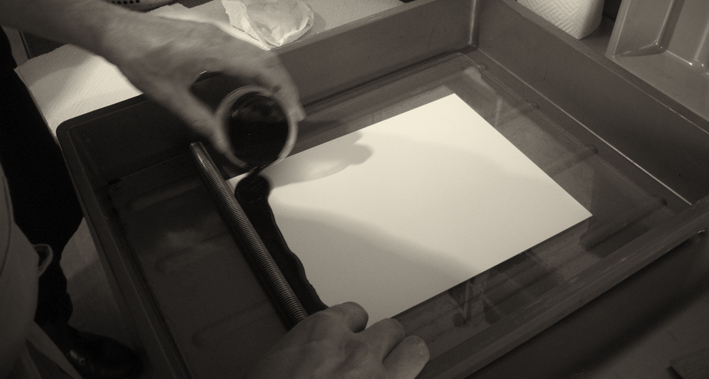
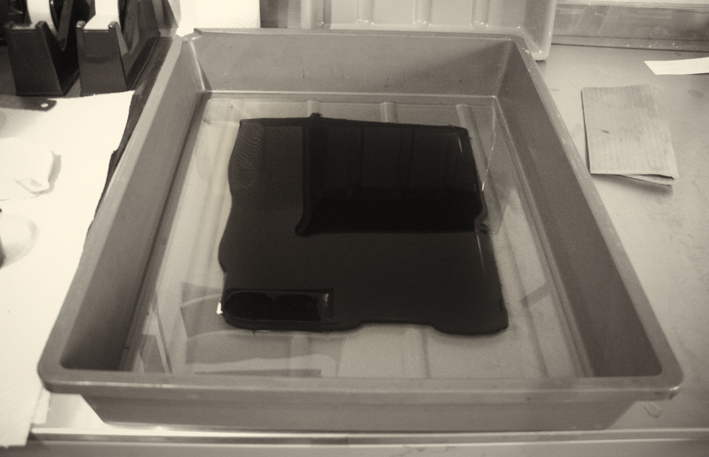
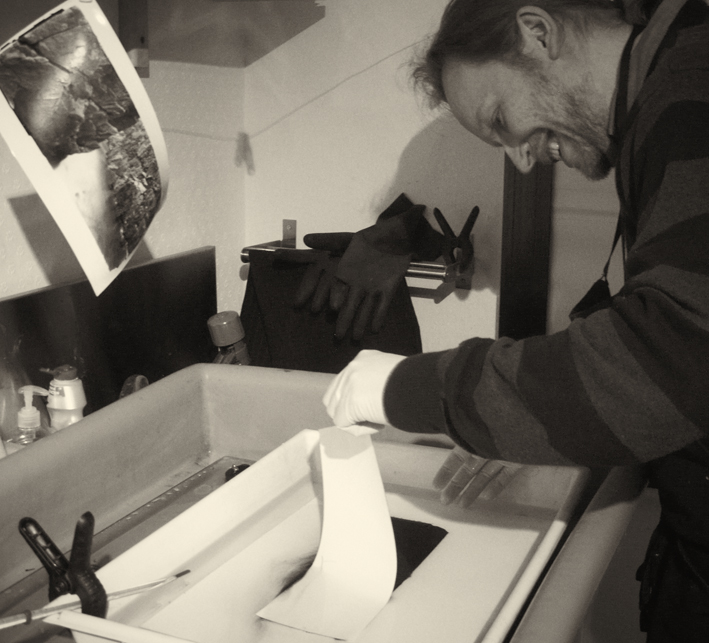
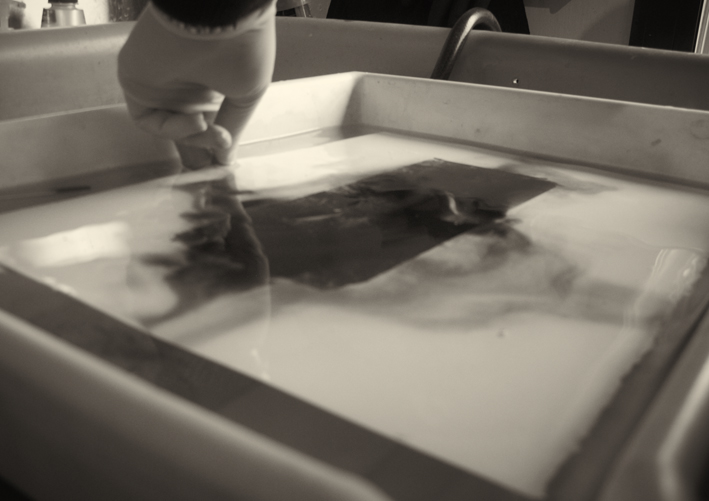
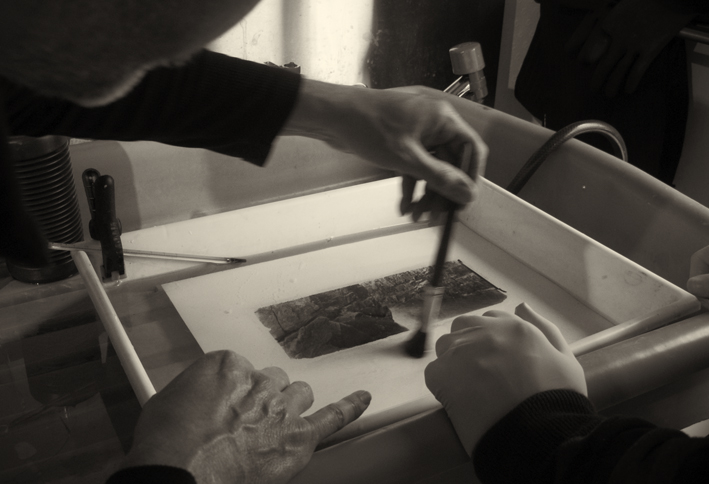
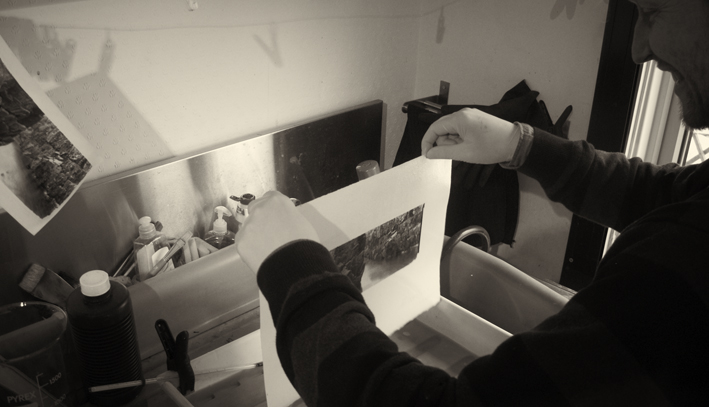
Developing a carbon print is always special. I have been carbon printing for 20 years and my pulse rate always notches up a few beats as I peel away the carbon tissue to reveal the delicate undeveloped print.

Everyone that I have taught to carbon print seems to experience this adrenalin rush too. This really is a great way to make black and white photographs, hand crafted and unique.

Carbon printing with David Chalmers

Carbon printing with David Chalmers

Carbon Printing with David Chalmers

Carbon Printing with David Chalmers

Carbon printing with David Chalmers

Carbon Printing with David Chalmers

Carbon printing with David Chalmers

Carbon Printing with David Chalmers

Carbon Printing with David Chalmers

Carbon Printing with David Chalmers


New experiments

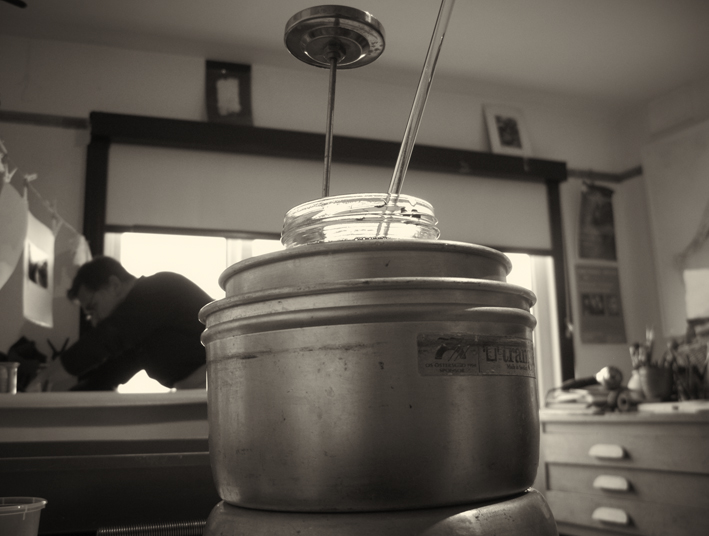
I have been experimenting with the new alternative sensitiser to dichromate this week and I have to report that Diazidostilbene CAS2718-90-3 aka DAS is a fantastic way to make carbon transfer prints. My new workflow no longer requires the tedious sensitizing procedure of spirit /dish sensitization of the carbon tissue.
I now simply take a piece of my pre- sensitized carbon tissue from 24 hours ago and make a stunning carbon print.

My first experiments followed the 0.6% DAS formula that was simply added to my carbon pigment and then coated
using my normal technique. The only key difference here was that I had t prepare the glop and coat in red safelight, other than that everything else is the same. When the tissue paper has dried it can be handled in low wattage tungsten lighting.

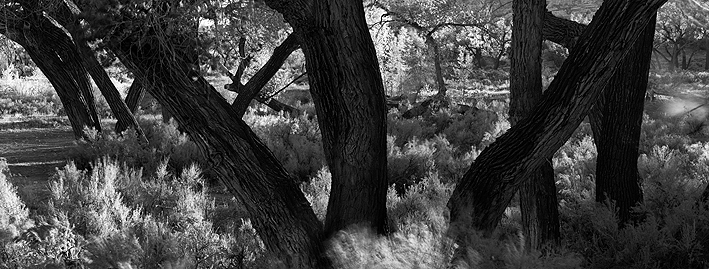
The first image that i made with DAS was of one of my all time favourite 8×10 HP5 negatives cropped to a 4×10 inch proportion. The exposure needed using my mercury vapour UV lamp at 2.5ft was a stop more than with usual potassium dichromate sensitiser. The development was exactly the same revealing a delicate silver birch landscape within 10 min at 42 degrees celcius. No dichromate stain to clear any more the print developed clean.

I will test the same batch of DAS paper in 7 days, 14 days and 28 days using the same exposure to see if the tissue is reacting the same over time.

Hope this encourages more people to invest in Diazidostilbene sensitizer as a easy work flow non toxic safe alternative greener way to make beautiful expressive carbon transfer prints.


8 x 10 inch Deardorff

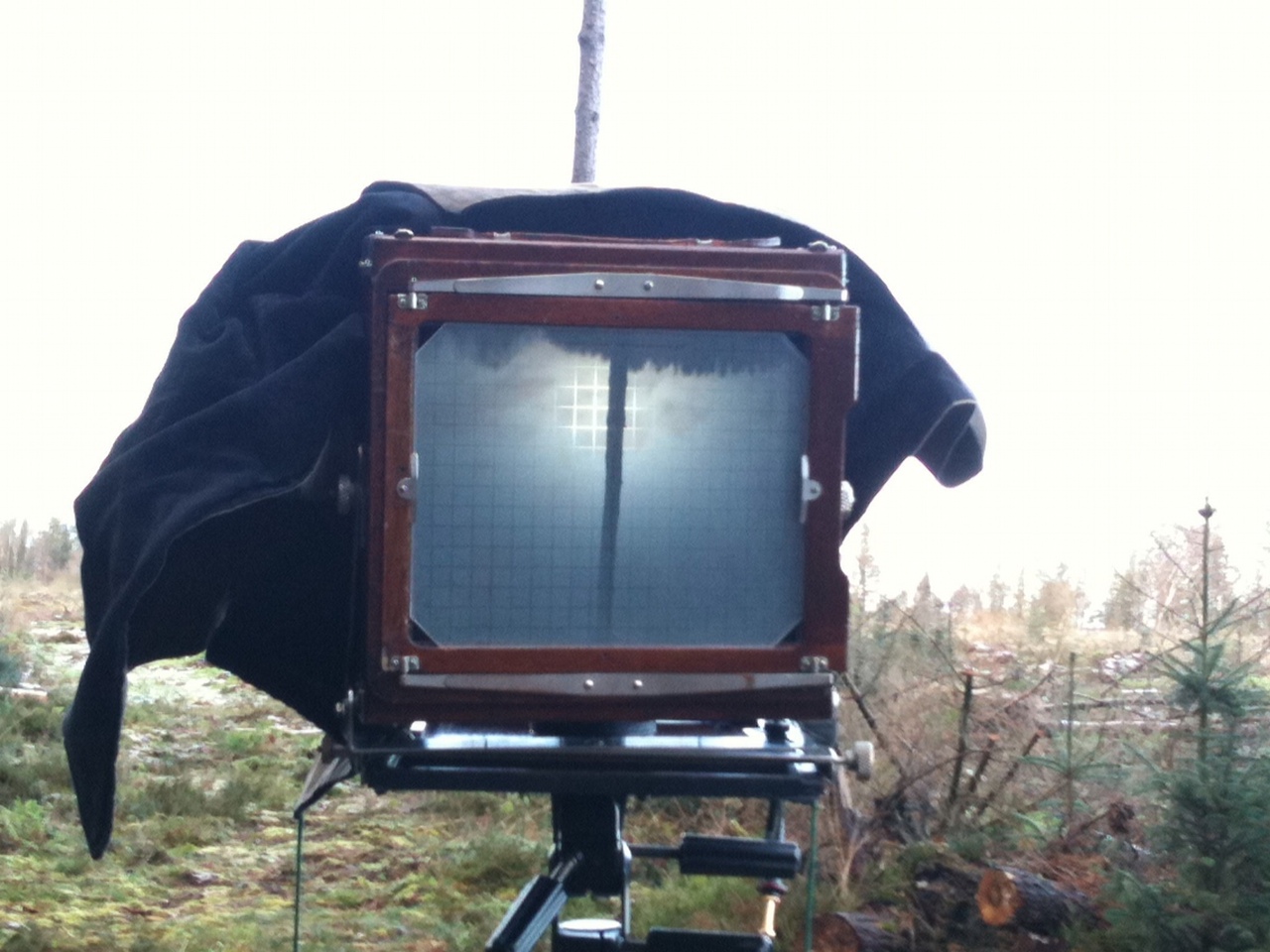
Each 8×10 negative is made with my Deardorff. The image making light is projected onto the ground glass screen of the camera. Composition and focusing are aided by the use of the dark cloth which can be seen resting on the top of the camera in this picture.


8×20 inch Carbon Print

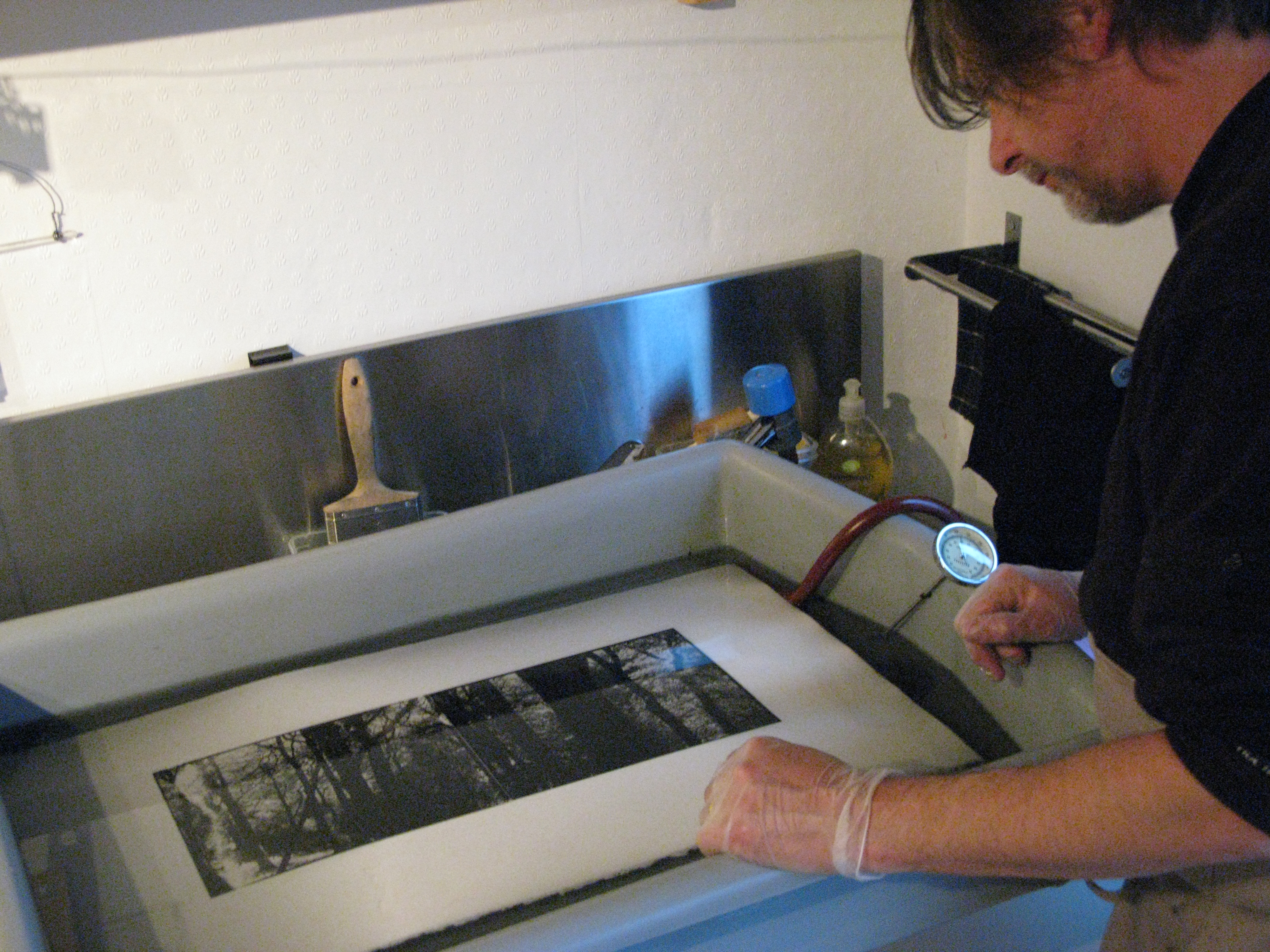
I made my first ever  8×20 inch Carbon print last week, which is now on exhibition at The South Street Gallery as part of my North Yorkshire Open Studios work in progress. This is the result of a 2 way exposure made in the field of my tree subject, photographed with my Deardorff and my 24inch repro claron.

This is the print in the final stages of development just before it was washed ready to dry.


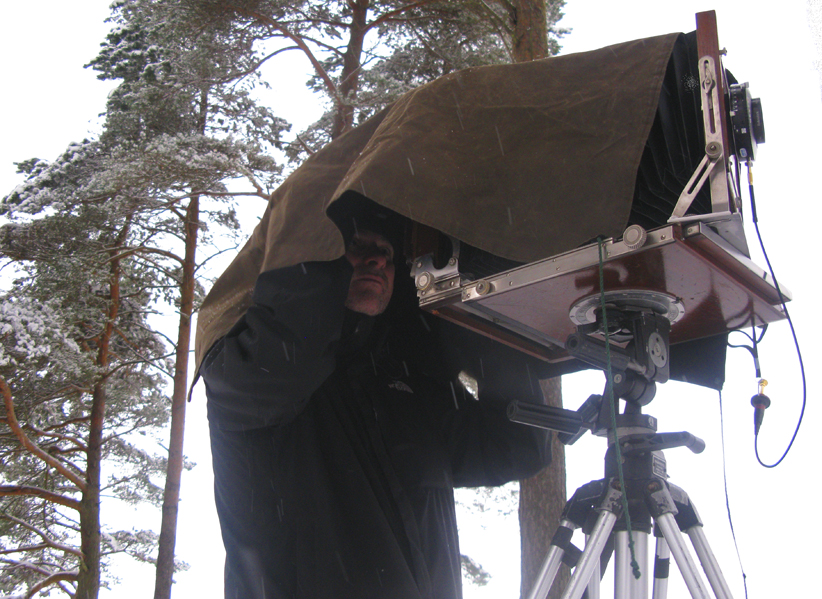
Deardorff 8 x 10 field camera

Carbon printing is a contact process. This means that the negative is in contact with the print surface and sunlight or UV light passes through the negative to form an image. The negative size therefore dictates the final print size. My 8 x 10 inch negatives are made with my Deardorff flat bed field camera. Probably the finest camera ever invented as it is compact, easy to carry and produces the large format negatives needed for my Carbon project.